
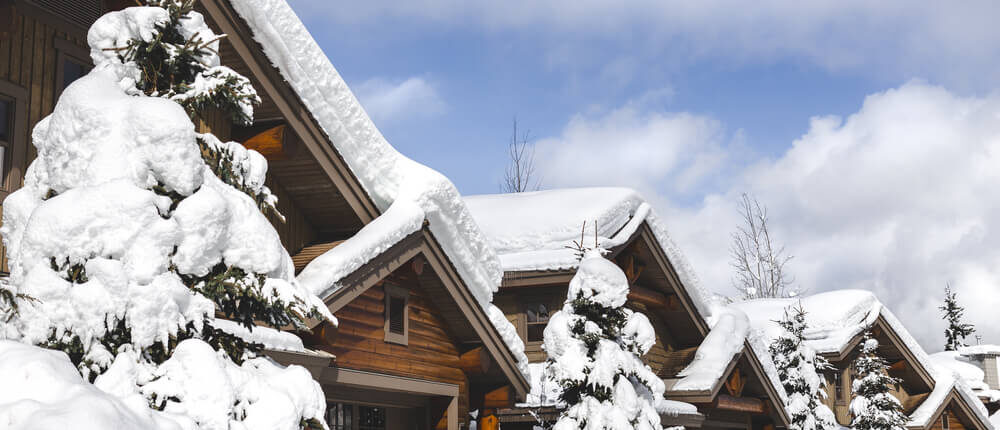
Your family might be dreaming of a white Christmas, but your roof sure isn’t. Snow impacts your roof in many ways. Keep reading to learn about the unique pitfalls of residential and commercial roofs and how you can prepare for an upcoming storm.
KSW Construction LLC has over 50 years of combined experience helping homeowners and building managers with their roofing and storm damage needs. We know exactly how inclement weather affects your roof in Pennsylvania and what to do to prevent serious damage.
How Snow Impacts Your Roof
Despite its storybook charm, snow and roofs don’t always get along. Here are the five main ways winter weather damages your roof:
1). Snow Adds Weight
As snow piles up, it adds significant weight to your roof. The longer it sits, the more pressure it puts on your home. When your roof and gutters feel the strain, you may notice cracks or sagging as the rafters and deck experience structural damage.
A light snow won’t cause such serious issues. But a heavy storm where the snow doesn’t melt for weeks can seriously impact the state of your roof (and the safety of those inside), potentially leading to a collapse.
But how much weight does snow really add?
Well, it depends on the type of snow and its water content! The colder it is, the fluffier the snow. These lightweight flakes are much less harmful to your roof. But when the temperatures hover right around freezing, that’s when you get that thick, wet snow. This is much more dangerous (and more likely to create ice dams).
The Insurance Institute for Business and Home Safety states that most buildings can support 20 pounds per square feet of snow. But what does that equal in inches?
- Freshly-fallen snow: 48 inches of snow (or four feet) equals about 20 pounds per square foot.
- Packed snow: 24 inches of snow (or about two feet) equals about 20 pounds per square foot.
- Ice: four inches of ice equals about 20 pounds per square foot.
Anything more than that, and it’s time to call the professionals. The amount of snow your roof can handle before it cracks or collapses also depends on a few other factors:
- The condition of your roof
- The age of your roof
- The pitch of your roof
- How evenly distributed the snow is on top of your roof
- How rainy it is
When the weight of snow is too much for your roof, it can cause cracks in your rafters, sagging, bowing walls, and even total roof collapse. Flat roofs are even more vulnerable to damage, since snow doesn’t naturally run off.
2). Snow Causes Leaks
As snow on your roof melts, it looks for somewhere to go. Often, it finds its way into small cracks in your roofing material and enters your building, whether that’s through shingles, skylights, flashing, chimneys, or vents. Once water infiltrates your roof deck, it can leak into your ceilings and walls. This can cause mold and mildew inside, which is a significant health hazard.
On commercial flat roofs, this is most often because of poor drainage. Ice and snow impacts your roof by blocking your drains. This causes pooling water, which enters your building through seams, membrane tears, and any other crevices it can find.
3). Snow Forms Ice Dams
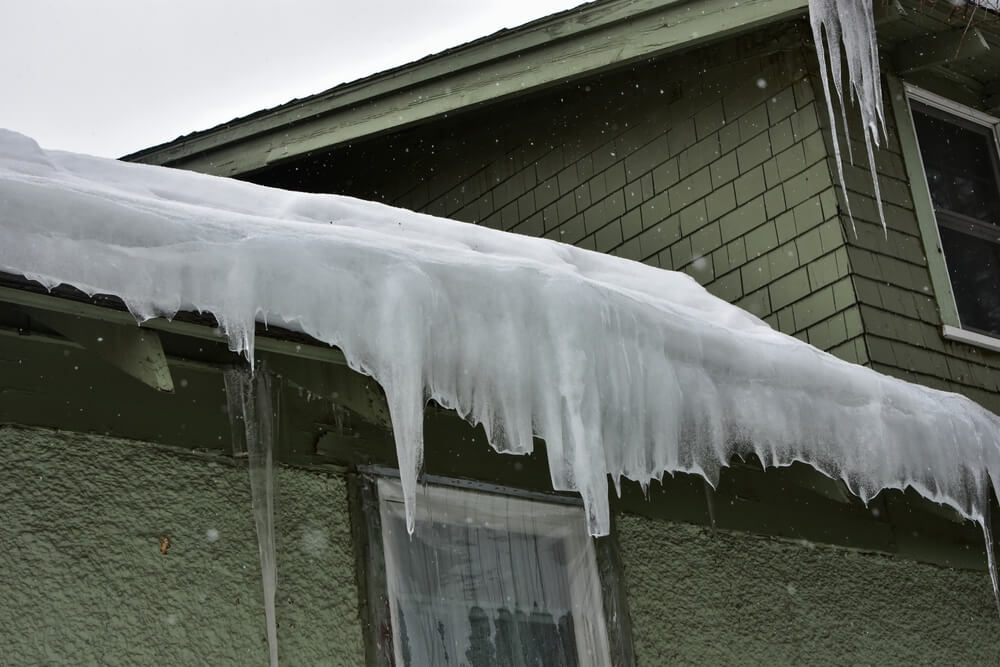
The most common ice damage on roofs are dams. Ice dams are blocks of ice that form along the edges of your roof. This happens when heat from below (your house) and heat from above (the sun) melts the snow on your roof. As this water runs down, it eventually reaches the soffit, your roof’s overhang. Without the heat source below, the water begins to refreeze right at the edge.
This dam then prevents water from running into your gutters like it’s supposed to. Instead, the water works backwards and finds its way under your shingles and potentially through your roof deck and into your home.
Ice dams look a little different on commercial flat roofs. Rather than long icicles hanging over the side, you might notice ice forming near downspouts, drains, or any place where water is supposed to exit. If ice blocks your drainage point, then the water will pool and find its way through seams in your rubber membrane.
To combat ice dams, you can install heat tape or other heating systems to prevent water from freezing. You can also add ice and water shields during your next roof replacement. However, the best way to prevent an ice dam is to insulate your house better. This way, heat doesn’t escape and cause ice to form at the eaves.
4). Snow Damages Roofing Material
These freeze-thaw cycles aren’t just temporary problems. They can slowly eat away at your roofing material, whether that’s metal, shingles, or rubber membrane. Winter weather can turn your material brittle, lift shingles, and pull at flashing. In addition, when water enters crevices in your roof, it freezes and expands, deepening cracks and weakening the roof.
5). Snow Spreads Debris
The last way snow impacts your roof is through debris. Just like a rainstorm, a snowstorm can cause debris to pile on your roof which can damage shingles, your roof membrane, or your flashing. It can also clog your gutters, which causes pooling water issues, as mentioned above.
Not sure if your roof can handle the upcoming snow? Let us take a look.
Residential vs Commercial Snow Damage
Snow impacts both residential and commercial roofs, but they each have unique pitfalls to watch out for.
Residential
- Shingles — Shingles protect against running water, but standing water is a whole other beast. That’s why moisture tends to get under your shingles during a snowstorm and make its way inside. Freeze-thaw cycles in the winter impact shingled and tiled roofs more than flat.
- Ice dams — Good news! Pitched roofs have a lower risk of roof collapse. However, homeowners with a pitched roof are more likely to have issues with ice dams as snow refreezes at the eaves.
- Gutter damage — Ice-filled gutters don’t drain properly and snow can rip them away from the roof’s edge.
- Older homes — The older your roof, the more susceptible it is to corrosion and collapse. Historic buildings need to be even more vigilant during the winter to make sure their roof can withstand the snow.
Commercial
- Snow shedding — Unlike pitched roofs, low-slope roofs are not designed for snow to naturally slide off. This causes more ice and snow to build up on the roof, and water often freezes before it can run off.
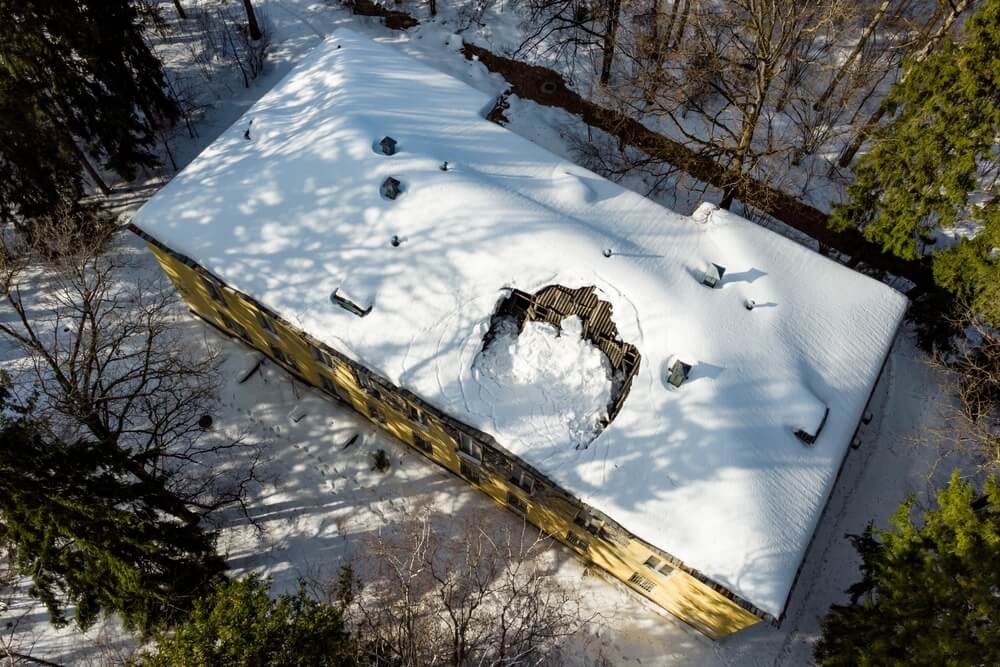
- Structural stress — As the weight adds up, this puts significant stress on your building. The wide, open expanse and large square footage of many commercial roofs means there is a lot of snow weight to bear. If it exceeds your building’s capacity, it can cause structural damage and roof collapse.
- System damage — Many flat roofs house HVAC units and other building systems on top. Snow and ice can block or damage these systems, potentially causing problems inside.
Signs of Roof Damage From Snow
Not sure when the snow turns from pretty to dangerous? Here are signs to monitor for.
Residential
- Icicles hanging off your gutter
- Dripping water inside
- Discoloration on ceilings and walls
- New cracks in ceilings and walls
- Mold and mildew stains inside
- Damaged, curling, or missing shingles
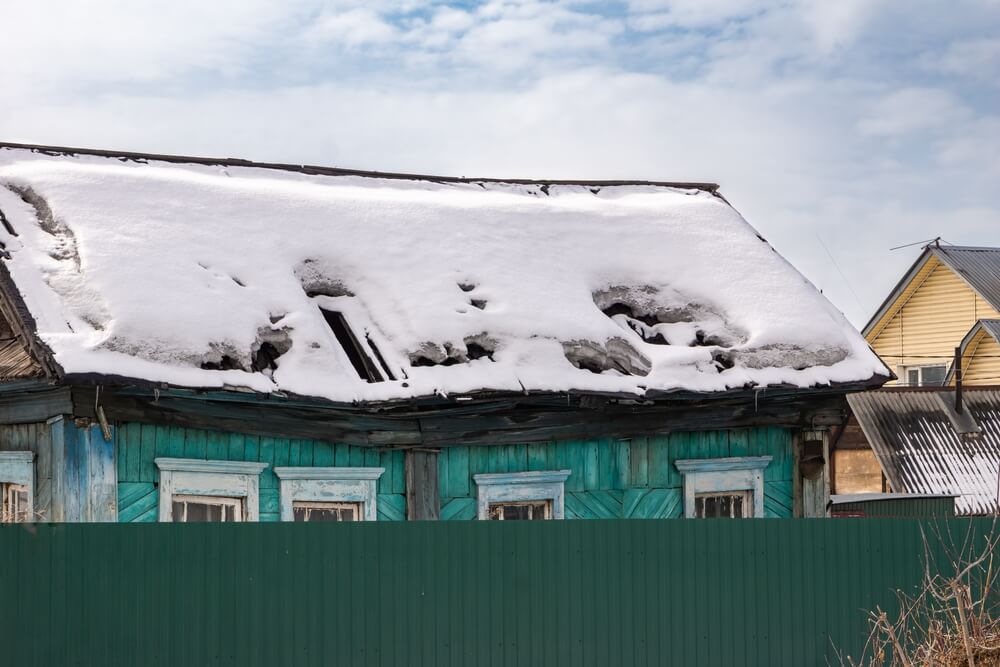
- Sagging roof
- Doors or windows that no longer open or close properly
- Bent or clogged gutters
- Cracked flashing
- Granules in your gutter
- Cracking and popping sounds
Commercial
- Sagging roof
- Sagging or damaged ceiling tiles
- Misaligned sprinkler heads
- Pooling water on your roof
- Ice blocking your drains
- Punctures in your roof membrane
- Dripping water inside
- Discoloration on ceilings and walls
- New cracks in ceilings and walls
- Mold and mildew stains inside
- Doors or windows that no longer open or close properly
- Cracked flashing
- Cracking and popping sounds
How to Prevent Snow Damage
You know how snow impacts your roof. But what can you do to stop it? Here’s what to do before and after a snowstorm to keep your roof safe.
Before the Snow
- Get your roof inspected by a professional
- Invest in snow removal tools to help prevent snow from getting too heavy (roof rakes, shovels, snowblowers, etc.)
- Ensure your attic is well insulated and ventilated
- Clear your gutters and check they are secure
- Fix any leaks, loose shingles, or membrane tears
- Buy an ice dam prevention system and turn it on
- Add snow guards
- Complete all regular roof maintenance
- Use a deicing product on sidewalks and steps
During the Snow
- Monitor how much snow has fallen
After the Snow
- Check for signs of damage
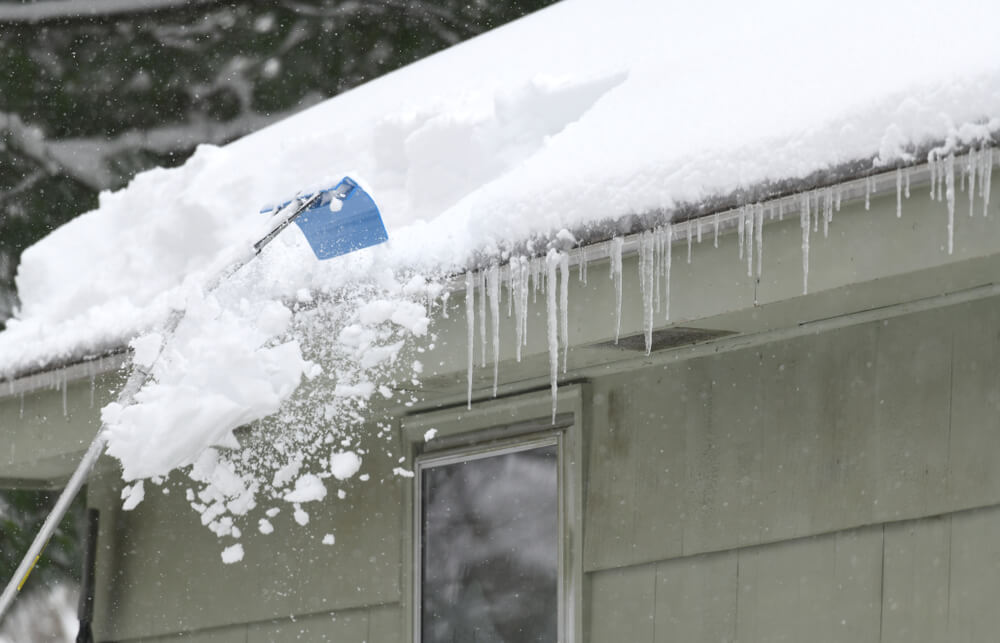
- If possible, carefully remove snow from your roof (or hire a professional)
Important Note: DO NOT climb on your roof after a winter storm. Climbing on an icy roof is extremely dangerous, so leave that to the professionals.
Common Questions About How Snow Impacts Your Roof
Every roof is different! On average, most roofs can hold 20 pounds per square foot (which equals four feet of fresh snow, two feet of packed snow, or four inches of ice). Older roofs or roofs that aren’t properly maintained are more vulnerable to snow damage.
It depends on your specific policy, but most home insurance covers roof damage from snow and ice. This includes damage from a roof collapse, structural problems, hail, or ice dams. However, coverage may be denied if damage is due to roof neglect or improper maintenance. Check your policy for specifics on what is included and what is not.
If you have the tools to remove snow yourself, you can give that a try. Roof rakes are a good option, but they are less effective on ice and can be difficult to get good leverage. Just remember NEVER to climb on your roof. And if you’re struggling with DIY snow removal, contact a professional in your area.
Need Roofing Help? Call KSW.
Whether you’re looking for a new roof ahead of winter or need snow damage repairs, we’re the team to call. We have over 50 years of combined experience providing expert roofing services in Central PA.
