
In Central PA, you can’t skimp on siding (and we’re not just saying that because it’s our job). It protects your home from Pennsylvania’s variable weather and has a huge impact on your property’s visual appeal. But is siding the only option? Learn the differences between siding vs cladding so you can pick what’s best for your property.
What Is Cladding?
Cladding is the umbrella term for any exterior layer that protects a building from the elements. Some cladding systems include a ventilated air gap and additional insulation. This type of assembly is often called a rainscreen system. However, not all cladding includes this!
With a rainscreen, siding is installed over furring strips or a subframe, rather than flush against the building. This creates a small drainage and ventilation cavity that allows moisture to drain and helps the wall dry. Wood siding and buildings in areas with high humidity or heavy rainfall can particularly benefit from a well-designed rainscreen system.
Cladding can be used on residential or commercial properties and is often applied in sheets, panels, or boards. Cladding systems can use many of the same materials found in siding, including wood, vinyl, composite, and fiber cement. Other common cladding materials include metal, brick, and stone.
CLADDING PROS
- Helps manage moisture when properly designed and installed
- Can improve energy efficiency when paired with continuous insulation
- Offers greater flexibility for modern and commercial exterior designs
CLADDING CONS
- Typically more complex and time-consuming to install
- More expensive than siding
- Less DIY-friendly, so we recommend sticking with the pros
What Is Siding?
Siding is a specific type of cladding material. It’s an exterior finish most commonly installed on residential homes and smaller commercial buildings, using planks attached in an overlapping horizontal or vertical pattern. It is associated with popular materials like vinyl, fiber cement, or wood.
In traditional installations, siding is installed over a water-resistive barrier without a ventilation gap. However, some modern installations incorporate rainscreen and insulation. Traditional siding installations are generally simpler than more complex cladding assemblies, which can incorporate these additional layers.
Here at KSW Construction, we always install house wrap (Tyvek), which is a breathable weatherproofing underlayment, under our residential siding projects. This allows air through but stops water and moisture. Rainscreen systems are not as common. We also have experience doing exterior insulation for additions if homeowners have heating and cooling concerns, but this is not required in PA.
It’s important to note that many siding materials can be installed as a cladding system. It will just involve more steps.
SIDING PROS
- Easier and faster to install
- Potentially DIY friendly (but if you’re not confident, always hire a pro)
- More affordable than cladding
SIDING CONS
- Can be more susceptible to moisture issues when a rainscreen isn’t used
- May offer fewer options for highly customized or architectural designs
Need An Exterior Upgrade?
Explore our siding replacement services for residential and commercial buildings.
Siding vs Cladding: What’s the Difference?
While they may look the same on the outside, there are many subtle differences between exterior cladding vs siding.
Purpose
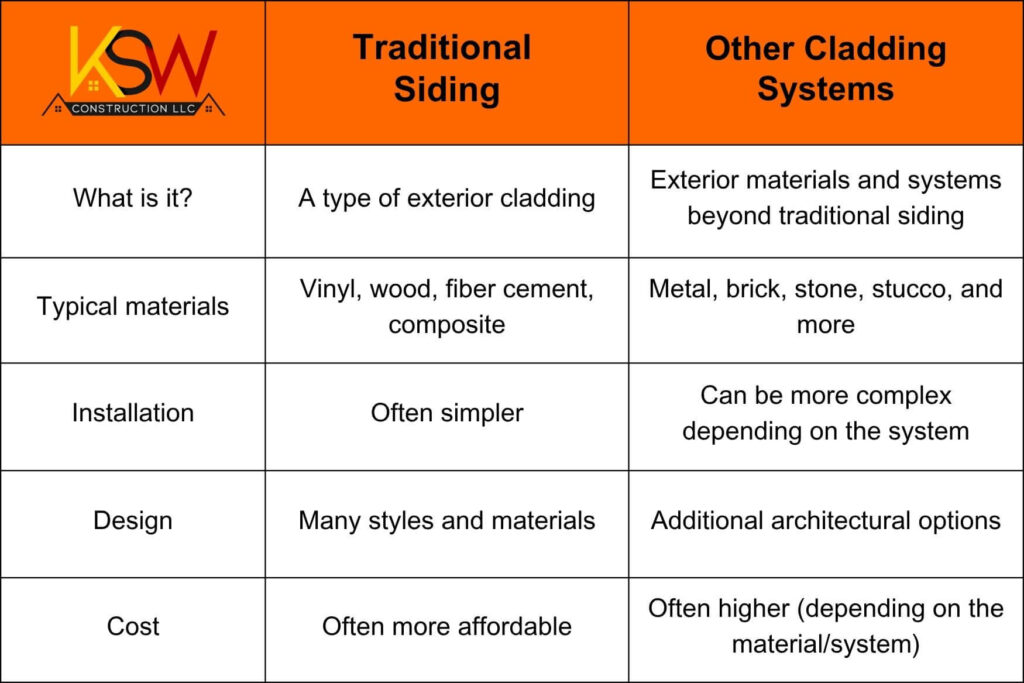
Siding serves as an exterior finish that enhances your home’s appearance while helping protect it from the elements. It’s most commonly used on residential buildings.
Cladding, however, is the umbrella term for exterior materials and systems, which can range from traditional siding to more complex assemblies that incorporate rainscreens, insulation, or other components. Therefore, cladding is a term used for both residential and commercial buildings.
Materials
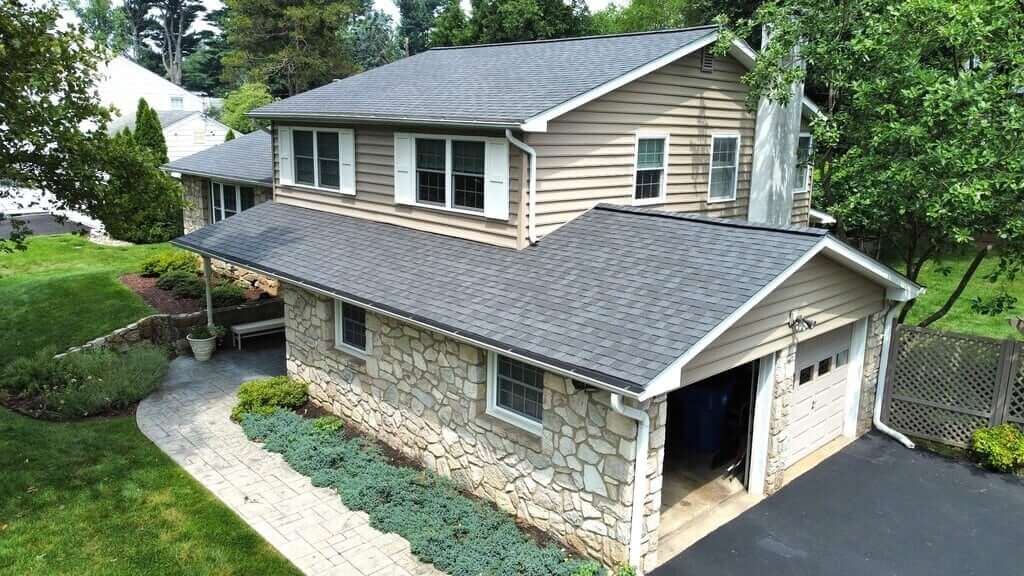
Because siding is a type of cladding, the two can use many of the same materials, including wood, fiber cement, composite, brick, stone, and more. Vinyl is commonly used for siding, while stucco (which requires exterior framing, insulation, and a plywood layer underneath) is generally considered a cladding system.
Durability
Durability depends largely on the material and installation method. Some cladding systems use thicker panels and moisture-management features, which can improve long-term performance. This is especially important when dealing with wood, such as with stucco’s plywood layer. Wood is susceptible to water issues, so moisture protection is essential.
Price
When comparing cladding vs siding cost, siding is a more budget-friendly option, while cladding tends to be more expensive. However, this year, we’ve seen significant price increases on building materials, including vinyl siding. Some items are rising weekly, with an overall increase of 6–10%.
Installation
Some cladding assemblies are more complex than traditional siding installations, incorporating features such as a drainage cavity, ventilation, or insulation behind the exterior material.
Energy Efficiency
Some cladding systems can improve energy efficiency by incorporating continuous insulation and air or moisture management into the wall assembly. However, overall insulation performance depends on the entire building envelope, not just the exterior finish.
Return on Investment
The ROI is similar for exterior cladding vs siding. Both improve your home’s resale value. The national average to replace your siding is about $11,500, but Pennsylvania tends to run a little higher. The total price depends on the size of your building, the siding material, and market conditions.
Exterior projects have an average ROI of 75%, and vinyl siding replacement specifically can see up to 97%. While some cladding systems have higher upfront costs, features such as continuous insulation can improve energy efficiency and potentially reduce heating and cooling costs over time.
Design Flexibility
Siding comes in a wide range of materials, colors, profiles, and textures, while other cladding systems can offer even more options for creating distinctive exterior designs.
Maintenance
The upkeep is similar for siding vs cladding. Both will require some basic maintenance, but the specifics depend on your material.
How to Pick Between Siding vs Cladding
The choice between siding vs cladding can be difficult, and there are several factors to consider. We recommend asking yourself the following questions to help decide:
- What’s my budget?
- What’s the climate in the area I live in?
- What look do I want?
- What siding material is the best match?
- How concerned am I about moisture, mold, and rot?
Here at KSW, siding is the most common choice for homeowners. It’s a great option if you want an affordable exterior finish with plenty of style options. If moisture management, energy efficiency, or a more complex architectural design are priorities, a different cladding assembly may be worth considering.
FAQs About Siding vs Cladding
No. Siding is a type of cladding, while cladding is the broader term for the exterior materials and systems used to cover and protect a building. Some cladding assemblies incorporate additional components, such as a rainscreen, drainage cavity, or continuous insulation, but not every cladding system includes these features.
Siding is one type of cladding and is commonly used on residential homes and smaller commercial buildings. Traditional siding products include vinyl, wood, fiber cement, and composite materials.
Yes, but it involves removing your old material and replacing it with an updated system. This is a big project that requires professional help, so contact our team to get started.
When comparing cladding vs siding cost, cladding is typically more expensive. As a broad term for any exterior coating on your building, it often involves a complex system, which makes installation more difficult, therefore increasing the price.
Work With Central PA’s Best
If your building needs exterior work, we’re the team to call.