
Roofs can make or break your home. Whether you’re looking for repairs or a full replacement, there are a lot of questions about how roofing works. Today, we’ll put these worries to rest with our residential roofing FAQs. From price to material, we’ll address all your concerns so you can begin your roofing journey with confidence.
- How Do I Know If I Need a Roofing Repair or Replacement?
- What’s the Best Roofing Material for a Pennsylvania Home?
- What’s the Cost of a New Roof?
- What’s the Most Affordable Roofing Material?
- Do You Need a Building Permit for a New Roof in PA?
- What’s the Main Reason for Getting a Roof Replacement?
- How Long Will it Take to Install a New Roof?
- How Long Does a Roof Last in PA?
- Are Roofing Estimates Free?
- Does Homeowners Insurance Cover Roof Replacement?
- How Do I Weatherproof a Roof?
- What is Considered Storm Damage to a Roof?
- What Causes Roof Damage?
- What Regular Maintenance Does a Roof Need?
- How Do I Prevent Roof Damage?
- What Do I Look for in a Residential Roofing Contractor?
Top Residential Roofing FAQs You Need to Know
#1. How Do I Know If I Need a Roofing Repair or Replacement?
Damaged roofs are no joke. They can lead to major leaks and serious mold problems. When in doubt, inspect your roof. You’ll know it’s damaged if you notice any of the following:
- Curled, cracked, or missing shingles
- Sagging roof
- Missing granules (or granules in the gutter)
- Leaks
- Rusted or damaged flashing
- Other visible signs of damage
Some of these issues only require a quick roofing repair. Replacing cracked shingles with fresh ones or patching flashing can often do the trick. However, some damage points to an underlying problem that can only be solved by a complete roofing replacement. The best way to know is to ask a professional.
If your roof is over 20 years old, it’s not in good condition, or there are signs of mold, that’s a clear indicator that it’s time for a replacement. Contact KSW Construction LLC for an expert opinion on the best solution for your roof.
#2. What’s the Best Roofing Material for a Pennsylvania Home?
Another residential roofing FAQ we hear often is: what’s the best roofing material? Unfortunately, there is no simple answer to this question. Like with most things, it depends on your situation.
You want a roof that can withstand the wide variety of Pennsylvania weather you’ll experience in a year, from snowy winters to intense heat. And don’t forget about storm season and high winds! Your roof needs to be strong enough to handle it all.
The best roofing material comes down to this: what are your priorities as a homeowner? Here are some factors to consider:
- Price
- Aesthetics
- Lifespan
- Energy efficiency
- Sustainability
- Durability
- Maintenance
- Ease of repair
If you’re working on a budget, asphalt shingles are your best friend. They are the most common roofing material because they work well in a variety of climates. If you want a roof that lasts a lifetime, metal might be a better choice. For a classic option, slate or cedar might be a good fit.
There is no one best material, but once you decide on the features that matter most, you can make an informed decision for your home.
#3. What’s the Cost of a New Roof?
Think you’re ready for a roofing replacement, but not sure if your wallet can handle it? The cost of a new roof depends on the material you choose, the size of your home, and the complexity of the installation.
A new roof is an investment, and it’ll pay off when it’s time to sell your house. A roofing replacement can get you a high ROI up to 68%.
On average, an asphalt shingle roof in Pennsylvania costs anywhere between $5k and $24k. But don’t let that number deter you! We offer financing options to make this payment manageable. Home improvement is our specialty, and we want everyone to have access to a quality roof. Chat with our team to learn more about your lending options or schedule a free estimate.
#4. What’s the Most Affordable Roofing Material?
Asphalt composite shingles are the most affordable roofing material. From there, you can choose 3-tab or architectural shingles. While 3-tab shingles are the least expensive, architectural shingles last longer and add more visual dimension to your roof.
#5. Do You Need a Building Permit For a New Roof in PA?
Whether or not you need a building permit for a new roof in PA varies from township to township. Recently, we have noticed that more and more municipalities are requiring permits for roofing and other home improvement projects. However, it doesn’t mean it’s always necessary.
The great news about this roofing FAQ? When you choose KSW for your roof replacement, we do the research for you! We’ll find out whether or not you need a permit, and we’ll handle all municipal communication to ensure we follow code and compliance. So no need to get stressed about the details or paperwork.
#6. What Are the Main Reasons For Getting a Roof Replacement?
A roof replacement can happen for a variety of reasons.
Maybe your roof is old, unsafe, or has been damaged in a recent storm. Another reason for getting a roof replacement could be aesthetics. If your roof doesn’t look as appealing anymore, it might be time for a fresh one. Lastly, if your roof needs frequent repairs, it’s often best to replace the entire thing and save yourself the hassle.
If you relate to any of these, contact KSW! We can provide a free estimate on roof repairs or replacement.
#7. How Long Will it Take to Install a New Roof?
Most roofing installations can be done in a day or two, but it depends on a few factors. Asphalt shingles are quick and easy, but other materials like wood shakes or slate tiles may take a few extra days. The size of your house also impacts the installation time because we have more surface area to cover.
Another factor to consider is the roof’s complexity and pitch. Navigating around multiple chimneys and pipes can slow down the process. Additionally, steeper roofs are more challenging to walk on, which will extend the installation time.
Simple, single-story homes can often be completed in a day, but larger homes with steeper roofs and more obstacles may take longer. Regardless of the project’s size, we always strive to be as non-disruptive as possible. Our crews work efficiently to get in and out quickly, while maintaining the highest standards of quality.
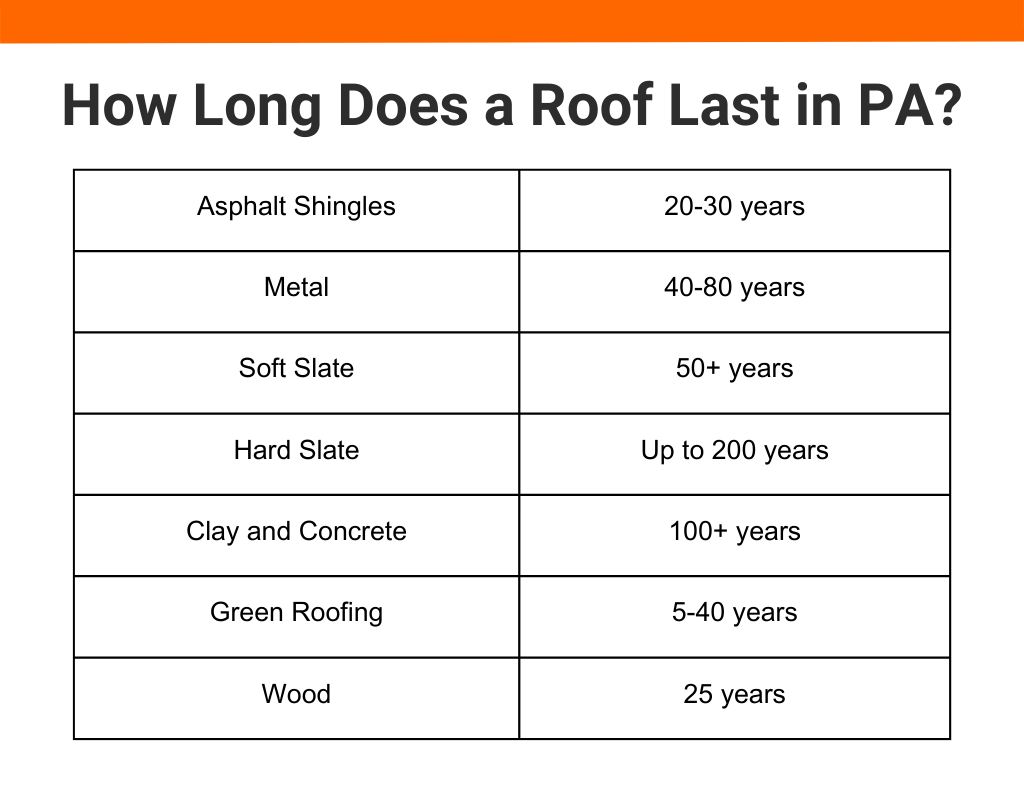
#8. How Long Does a Roof Last in PA?
Like many of our residential roofing FAQs, this answer depends on your situation. Several things impact your roof’s lifespan.
The first is material. Some of the most common roofing materials, like asphalt shingles, can last anywhere from 20 to 30 years. Others, like metal or slate, can last for upwards of 50 years. Color also plays a role. Dark-colored roofs absorb more heat, which causes them to expand. As they cool, they shrink. Over time, this movement can cause your shingles to crack.
Another factor is climate. Heavy rain, snow, hail, and extreme temperatures can damage a roof and impact how long it lasts. Roofs are made to withstand weather, but frequent storm damage can definitely take a toll.
Maintenance is also a consideration. Just like other areas of your home require seasonal maintenance, so does your roof. Without this, it won’t last as long as it should. Some common maintenance items include cleaning gutters, removing moss, and inspecting your shingles.
The quality of the installation will also determine how long your roof lasts. A poor roofing installation from an inexperienced team can lead to leaks and loose shingles. With KSW, you don’t have to worry about that! Our certified roofing technicians have 50 years of combined experience and guarantee a rock-solid roof every time.
#9. Are Roofing Estimates Free?
Yes! At KSW Construction, all roofing estimates are 100% free. Our team will come out to inspect your roof, assess the damage, and provide you with a detailed pricing estimate, free of charge.
#10. Does Homeowners Insurance Cover Roof Replacement?
It depends on your insurance plan. However, most homeowners insurance policies cover a roof replacement if it’s caused by unexpected damage or extreme weather. Roof replacements due to old age or negligence are not covered. Make sure you check with your insurance provider for specifics about your plan.
#11. How Do I Weatherproof a Roof?
Worried about storm season? You’re not the only one. This residential roofing FAQ covers important steps you can take to ensure your roof is prepared for the upcoming weather.
Start by having your roof professionally inspected to ensure there are no safety hazards or damage that could cause problems after the first rainfall. Additionally, do your own inspection from the attic—check the underside of the roof to confirm everything is in good condition and properly insulated.
Next, clear any debris from your roof to prevent it from trapping moisture. Trim nearby trees to avoid branches falling onto your roof during a storm. Also, replace any curling or damaged shingles that could lead to leaks, and secure any loose shingles to ensure they don’t get blown off during high winds.
Finally, clean your gutters and downspouts, as they’re essential for directing water off your roof and away from your home’s foundation. Clogged gutters can cause water to pool, leading to leaks and damage. To reduce debris buildup, consider installing gutter guards for added protection.
#12. What is Considered Storm Damage to a Roof?
Roof storm damage is anything that impacts the structural integrity of your roof. This can include missing shingles, cracked shingles, hail cavities, damaged flashing, granule loss, and more. Storm damage should be addressed immediately to avoid it escalating into a serious issue.
#13. What Causes Roof Damage?
Roof damage is mostly caused by extreme weather. Winds 45 miles per hour and greater are dangerous and can rip shingles right from your roof or cause debris to fall. Along with that, heavy rain can wear away your roof over time and lead to leaks and mildew. Hail is another factor. It can cause serious dents and craters in your roof.
Snow can also cause damage. A light snow won’t be an issue, but as it accumulates on your roof, it adds a lot of weight. When snow melts, it can leak into your home or form ice dams. And as snow freezes and thaws again and again, it can damage your roofing material.
Lastly, old age can make a roof more susceptible to damage. If your roof is reaching the end of its life, contact an expert team about a roof replacement.
#14. What Regular Maintenance Does a Roof Need?
To get the most out of your roof, it needs a little maintenance. These recommendations are things you can do yourself, or you can hire a professional for greater peace of mind.
Twice a year in the spring and fall, visually inspect your roof. Check for signs of damaged shingles and flashing. While you’re out there, clean your gutters and downspouts so they don’t get clogged and stop water from running off your roof.
After heavy rain or snow, we suggest checking your attic for leaks. Clear debris off your roof and repair any issues as needed. Every spring, trim trees and shrubs away from your house so they are less likely to damage your roof.
In the winter, monitor any snow that builds up on your roof and carefully clear it off once the storm is over—or call a professional for help.
If you’re worried about the state of your roof or cannot safely access your roof, it’s always best to hire a professional for an inspection, especially ahead of extreme weather.
#15. How Do I Prevent Roof Damage?
This is a popular roofing FAQ, but unfortunately, roof damage can’t be avoided completely. Storms are out of your control, and old age will impact your roof no matter what you do. However, you can limit damage with the following steps:
- Complete the proper roof maintenance (outlined above).
- Trim back trees and secure loose signage, outdoor structures, and equipment that can get thrown around in a storm.
- Remove fallen debris from your roof.
- Keep your gutters cleared.
- Improve your home’s insulation and ventilation (especially ahead of a snowstorm).
- Inspect your roof before a storm to make sure it’s in good condition.
- Inspect your roof immediately after a storm to catch any problems early.
#16. What Do I Look for in a Residential Roofing Contractor?
This final FAQ is one of the most important. The residential roofing contractor you choose can make a significant difference, so here are the key factors to consider when selecting the right company for the job.
Explore their past work. Look at both interior and exterior projects to ensure the quality is up to your standard. Also research how many years they’ve been in business. Experience is crucial, which is why our team at KSW has over 50 years of combined experience, so every project is completed with skill and care.
Consider their values as a company. Do they do the little things right? What do they prioritize? When you work with us, we focus on knowledge, stability, and workmanship. We promise expert guidance and a job well done, every single time.
Our biggest tip is to read reviews. See how previous customers feel about the process and end results. This will give you insight into the quality of your residential roofing contractor, their customer service, communication, and reputation in the community.
See what our customers have to say:
Work With KSW
Say hello to your new residential roofing contractor, and see what makes KSW different.
Get In Touch